High-traffic environments are defined by movement. People are walking, driving, commuting, and making rapid decisions about where to focus their attention. In these settings, permanent signage often fades into the background, while temporary visuals stand out precisely because they are unexpected. Used well, temporary visuals can shape perception, guide behaviour, and create meaningful engagement in places where attention is scarce and competition is intense.
From city-centre construction zones to transport corridors and retail redevelopments, temporary visuals have become a strategic communication tool rather than a stopgap solution.
In busy environments, familiarity breeds invisibility. Permanent signs, shopfronts, and billboards become part of the visual noise. People stop actively noticing them, even if they are well designed. Temporary visuals disrupt this pattern. Their presence signals change, activity, or relevance, which naturally draws the eye.
This effect is amplified in locations where people do not expect visual storytelling, such as scaffolding, barriers, or transitional spaces. When these surfaces are used intentionally, they interrupt routine visual scanning and invite engagement.
Temporary visuals benefit from what can be described as “contextual contrast”. A bold graphic on a construction structure feels different from a static advert because it reframes an inconvenience as information or even interest. This moment of interruption is where attention is captured, even if only briefly.
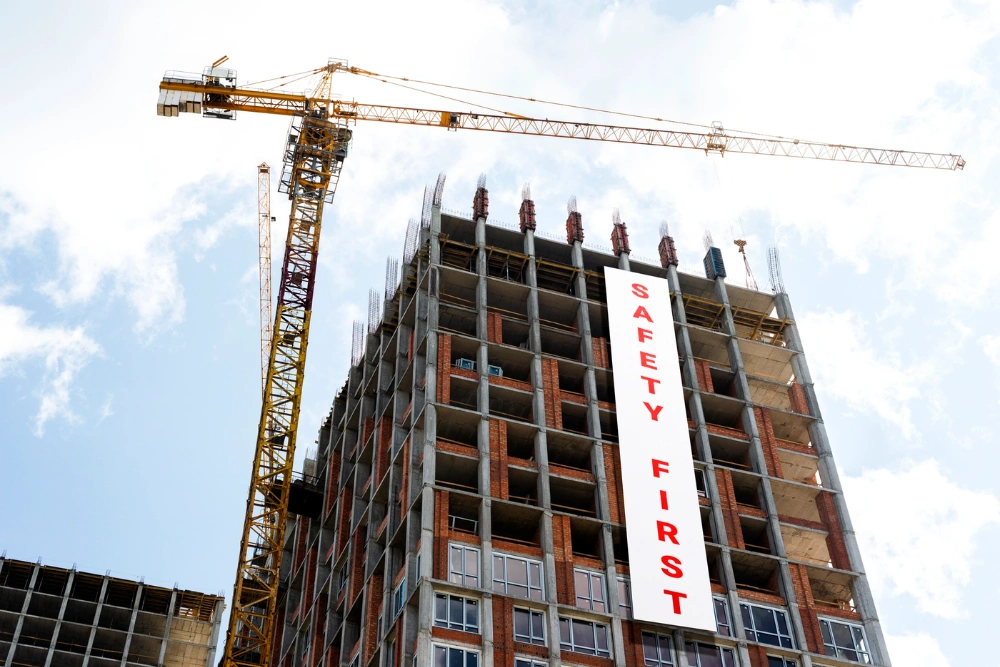
Scaffolding is often viewed as visual clutter, yet it occupies some of the most prominent real estate in high-footfall areas. When left bare, it contributes nothing beyond obstruction. When treated as a visual surface, it becomes an opportunity to communicate at scale.
Scaffolding banners allow messages to sit at eye level and above, following pedestrian sightlines rather than competing with street furniture. They provide a continuous canvas that can be adapted over time as projects progress or campaigns change.
In high-traffic settings, scale matters. Temporary visuals must be legible at speed and distance. Scaffolding offers height and width that smaller formats cannot. When combined with clear design and concise messaging, this scale ensures that even fleeting glances register something meaningful.
While temporary visuals are often associated with advertising, their value extends further. They can inform, reassure, and guide. On construction sites, they can explain what is happening and why. In retail transitions, they can maintain brand presence during refurbishment. In public spaces, they can manage expectations and reduce frustration.
This strategic use mirrors how other industries approach attention. For example, dental marketing agency focuses on turning brief digital interactions into long-term engagement for clinics. The principle is the same: capture attention quickly, deliver clarity, and build trust over time. Temporary visuals in physical environments operate under similar constraints, just offline.
Even though visuals are temporary, consistency matters. Colours, tone, and messaging should align with the wider brand or project identity. When scaffolding banners feel disconnected or poorly produced, they undermine credibility rather than enhance it.
Complex messages fail in fast-moving environments. Temporary visuals must prioritise clarity. This means limited text, strong contrast, and simple visual hierarchies. The goal is recognition, not explanation.
High-traffic areas are often exposed to weather, pollution, and physical contact. Materials must withstand these conditions without degrading quickly. Poor-quality print or fixings can lead to sagging, fading, or tearing, which distracts from the message and creates a negative impression.
When specified correctly, scaffolding banners balance durability with flexibility, making them suitable for changing environments without compromising appearance.
| Aspect | Temporary Visuals | Permanent Signage |
| Attention Level | High due to novelty | Lower over time |
| Flexibility | Easily updated or replaced | Fixed for long periods |
| Contextual Fit | Adapts to changing environments | Assumes stability |
| Cost Efficiency | Scalable for short-term use | Higher long-term investment |
This comparison highlights why temporary visuals perform so well in environments defined by change and movement.
Temporary visuals do not rely on prolonged viewing. Their strength lies in repetition across time and space. Commuters may see the same scaffold banner daily, absorbing its message incrementally. Over weeks, this builds familiarity and recognition without requiring sustained attention.
Temporary visuals work best when integrated into a broader communication strategy. They reinforce online campaigns, support brand narratives, and maintain presence during periods of transition. Used in isolation, they still add value, but aligned with wider messaging, their impact multiplies.
Temporary does not mean disposable. In high-traffic environments, it often means timely, relevant, and responsive. Visuals that acknowledge change and movement feel more human and more honest than static messages pretending permanence.
When scaffolding and transitional structures are treated as communication assets rather than inconveniences, they reshape how people experience disruption. They show that even in moments of construction or change, attention can be respected rather than demanded.
The future of visual communication in busy environments belongs to those who understand this balance: brief but clear, bold but considered, temporary yet meaningful.
© 2026 Point of Sale Printers. All Rights Reserved.